Your balance is your coordinating ability. This allows you to control the center of gravity of your body. In everyday life, you have to deal with this all the time. For example, your balance ensures that you can walk without falling over, that you can sit upright and that you can jump over a ditch without falling.
What is balance training?
With balance training, you promote neuromuscular coordination. That is the collaboration between your brain and your muscles. Your balance uses different systems. Your eyes (the visual system) help you orient in space. Your inner ear (vestibular system) records rotating movements and accelerations. The receptors in your joints and muscles and the pressure receptors in your skin (together the proprioceptive system) pass on changes in your posture.
All the stimuli that you perceive through the body through these systems come together in your central nervous system. Your brain, in turn, sends the message to your muscles. They adapt immediately to prevent you from falling over. All this is happening at lightning speed, and it should be like that as our body has to constantly adapt as we move.
With the help of balance training, you teach your muscles to respond more quickly to the messages of the brain. This allows you to improve the fine motor skills and coordinating skills.
All the stimuli that you perceive through the body through these systems come together in your central nervous system. Your brain, in turn, sends the message to your muscles. They adapt immediately to prevent you from falling over. All this is happening at lightning speed, and it should be like that as our body has to constantly adapt as we move.
With the help of balance training, you teach your muscles to respond more quickly to the messages of the brain. This allows you to improve the fine motor skills and coordinating skills.
What are the benefits of balance training?
The benefits of balance training are great. For example, you improve your posture and can stand or sit in a better way. This often also has a positive impact on your self-confidence and the way you come across to others. With balancing exercises, you mainly train your deep muscles, especially the muscles in the trunk and around your spine. This means less wear and tear of the back and less muscle pain due to poor posture. In addition, you prevent injuries both during exercise and in daily life because your body does not constantly get imbalanced, causing muscle strain.
In addition, you are able to perform movements more efficiently and smoothly, which has a positive effect on your body feeling. Your performance is getting better and you're making progress faster.
Exercises for your balance
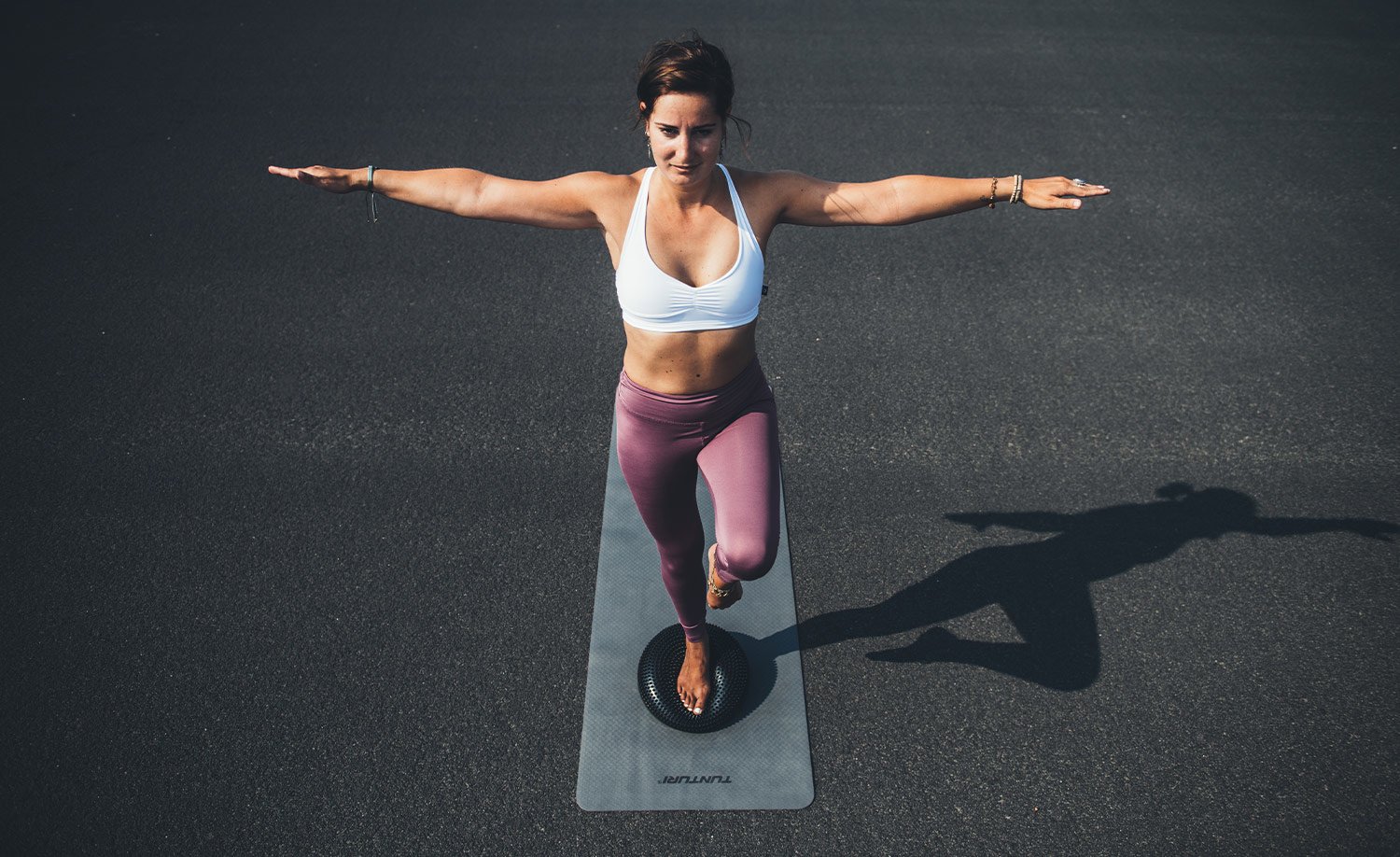
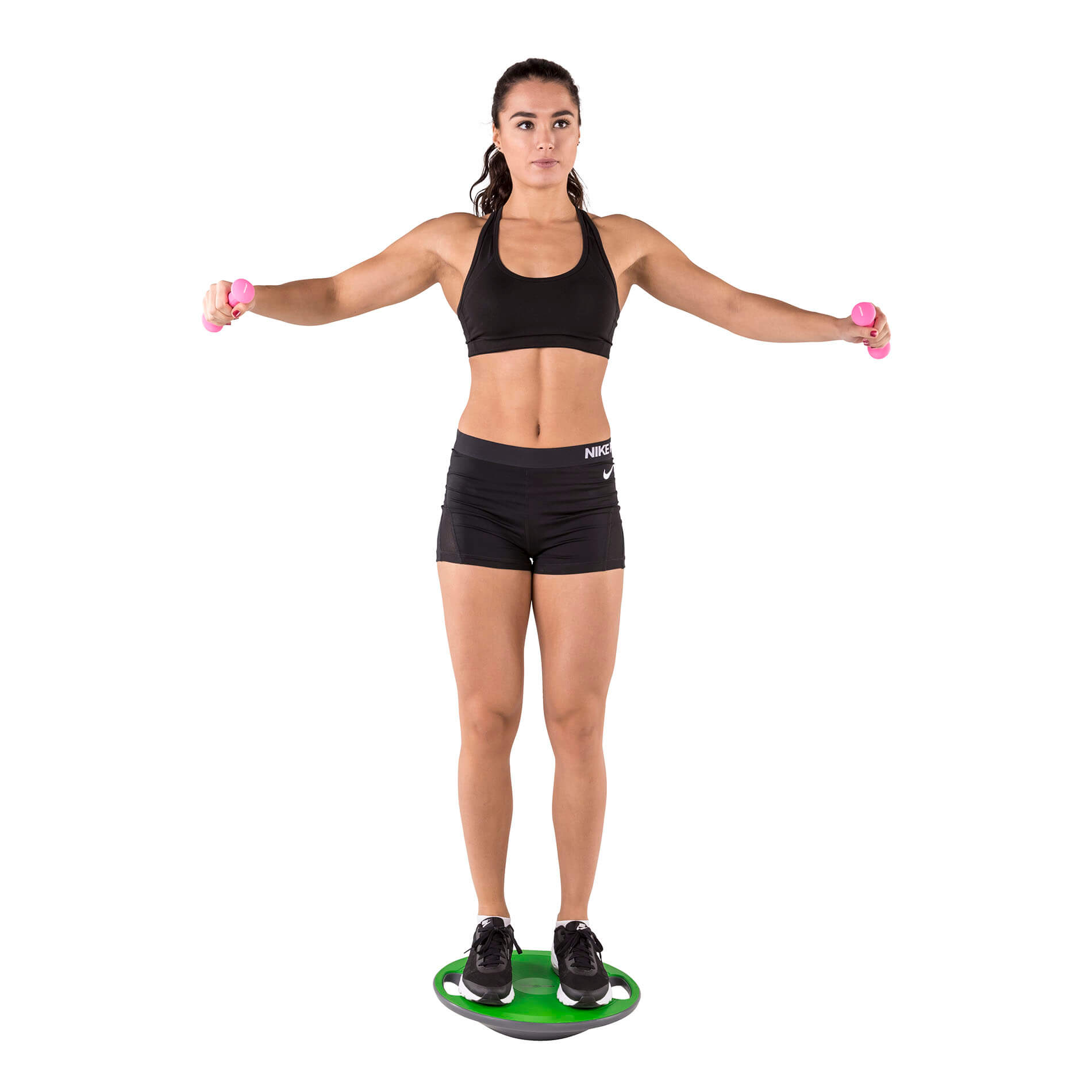
There are many different exercises you can do to train your balance. Examples include the standing scale, single arm shelf and lunges, but also the simple standing on one leg and pulling up your other leg while you keep breathing in and out calmly.
You can also use various accessories that you can easily grab if you want to interrupt your work to do some exercises. Think of a balance board, balance pods, an air stepper pad, twister motion trainer or balance pad. Most accessories are also easy to take with you to the office or on vacation. So you can work on your balance anytime, anywhere!